
How to Make Vinegar at home is easy and more delicious than store-bought vinegar. This step-by-step guide covers how make apple cider vinegar, red wine vinegar, necessary supplies, potential issues and solutions.
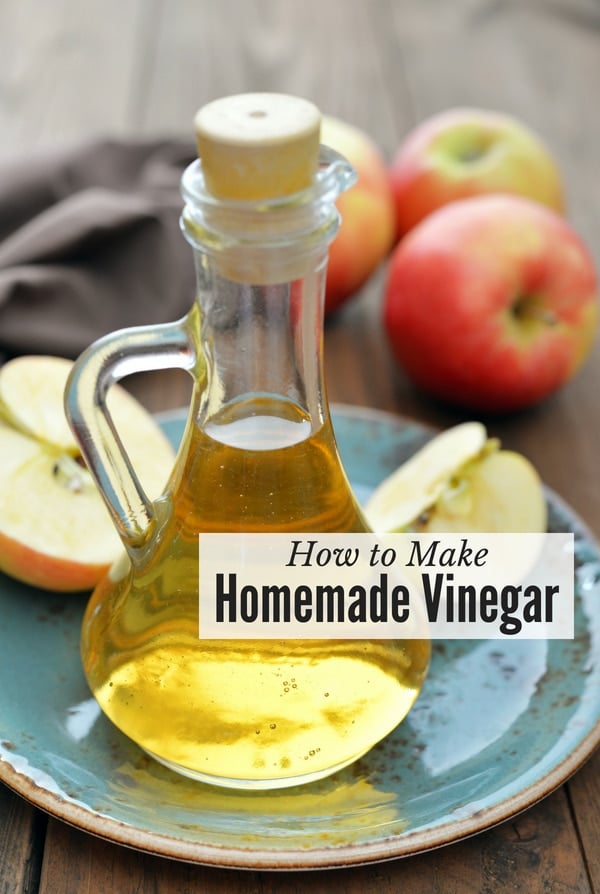
Most pantries are stocked with a variety of vinegar types but did you know you can make your own vinegar?
This guide on How to Make Vinegar shares details of making both Red Wine Vinegar and Apple Cider Vinegar.
It's more delicious than store-bought vinegar and is easy with some specifics you need to know to be successful.
Jump to:
- Why Make Vinegar?
- Vinegar Making Supplies: Everything You’ll Need to Make Your Own Vinegar
- How to Make Red Wine Vinegar
- How to Make Apple Cider Vinegar
- The Vinegar 'Mother'
- How to Make Vinegar at Home – Step-by-Step
- Recipe FAQs + Pro Tips
- Vinegar Making: Troubleshooting Potential Issues and Solutions
- Vinegar Making Supplies: WHERE TO BUY
- Starting Additional Vinegar Batches from your Vinegar Mother
- Recipes Ideas for Homemade Vinegar
- Recipe
Why Make Vinegar?
Vinegar is easy to find at most stores and inexpensive to buy. So why make it yourself? Because the taste is recognizably better than purchased vinegar.
Plus, YOU made it. Isn't that the best part? Some say it's a great way to use up wine which does not get consumed (that seems an oxymoron to me; 'wine' 'not consumed').
Vinegar making can be done continuously so a fresh supply is always available.
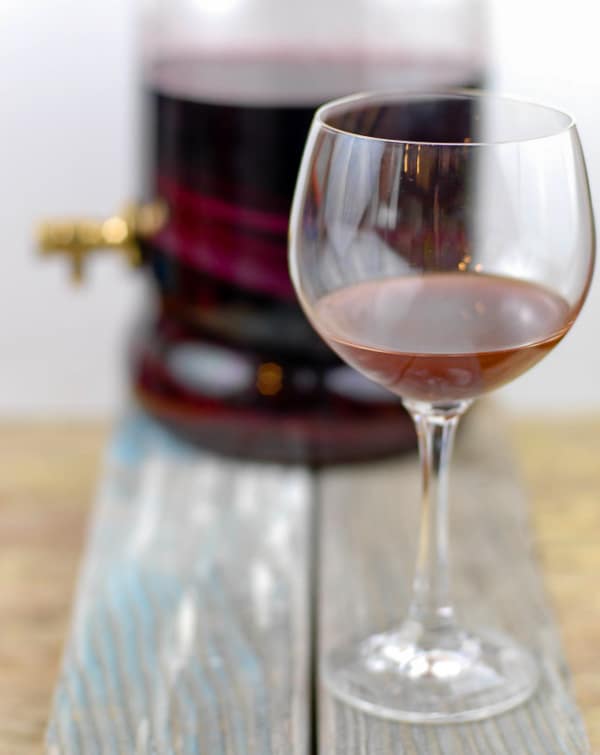
Vinegar Making Supplies: Everything You’ll Need to Make Your Own Vinegar
- 1 gallon wide-mouth glass jar preferably with a metal spigot (can be larger than 1 gallon). NOTE: must be glass or ceramic crock; plastic will interact chemically with the vinegar.
- Cheesecloth and rubber bands
- A vinegar 'mother' (see Where To Buy below)
- The liquid to convert into vinegar (sulfite-free organic red wine if making red wine vinegar or hard cider if making apple cider vinegar; you can also make white wine vinegar through the same process)
How to Make Red Wine Vinegar
Can Any Wine be Used?
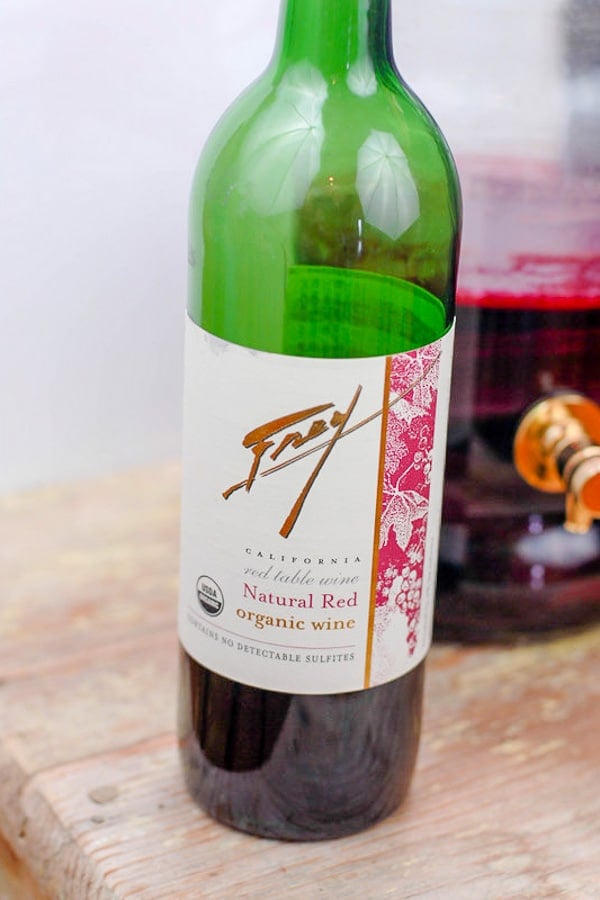
Sulfite-free organic wine is required for making red wine vinegar. Sulfites can impede the conversion process so low or no sulfite wine should be used.
How to Make Apple Cider Vinegar
Can it be made with regular Apple Cider?
Hard apple cider is used to make apple cider vinegar. The alcohol content is needed for the vinegar conversion.
The Vinegar 'Mother'
This name has always evoked memories of Sigourney Weaver in the movie Alien when she confronts 'THE MOTHER', the oozy, dripping, teeth-gnashing alien giant. A vinegar mother isn't much prettier.
What Is a ‘Vinegar Mother’?
The vinegar mother is a mass of bacteria which serves to convert the liquid into vinegar. Also called a Scoby, which is an acronym for “Symbiotic Culture Of Bacteria and Yeast”.
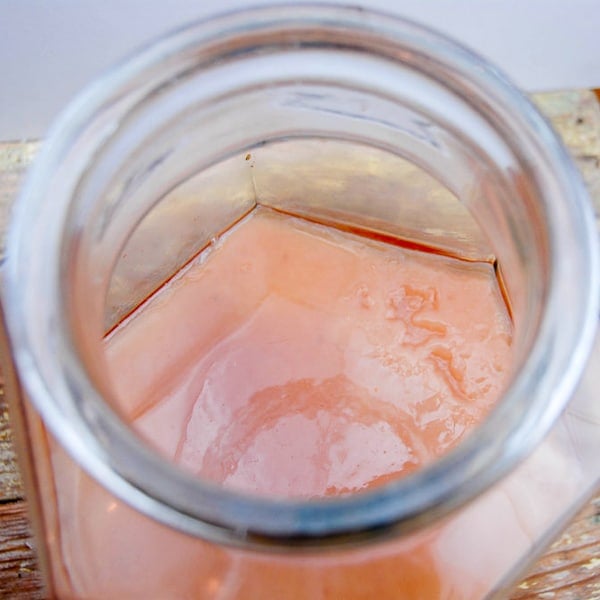
When you begin to make vinegar, the vinegar mother is an innocuous mucoidal blob which you put in the jar with the liquid.
PRO TIP: You'll need a vinegar type-specific mother; they are different depending on whether you are making apple cider vinegar, red wine vinegar or white wine vinegar.
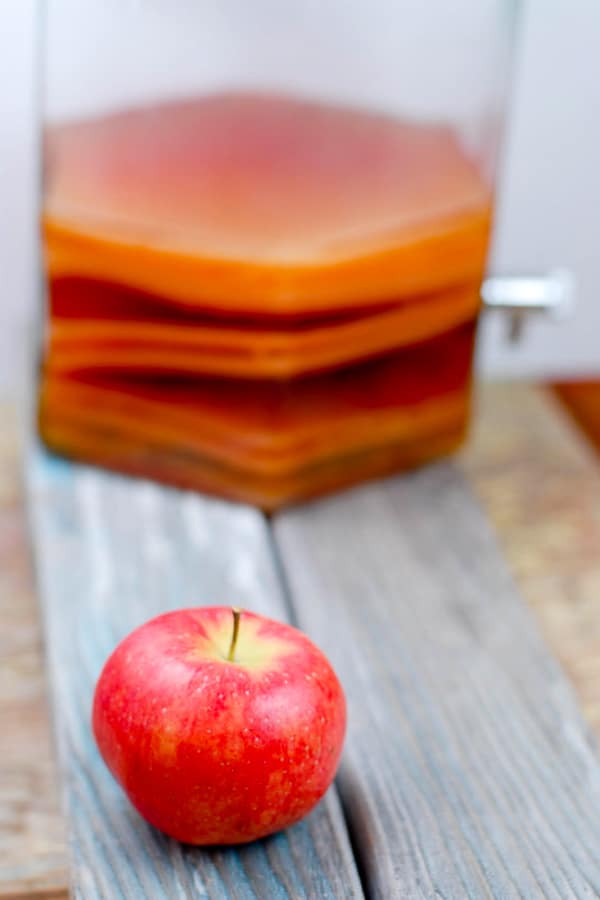
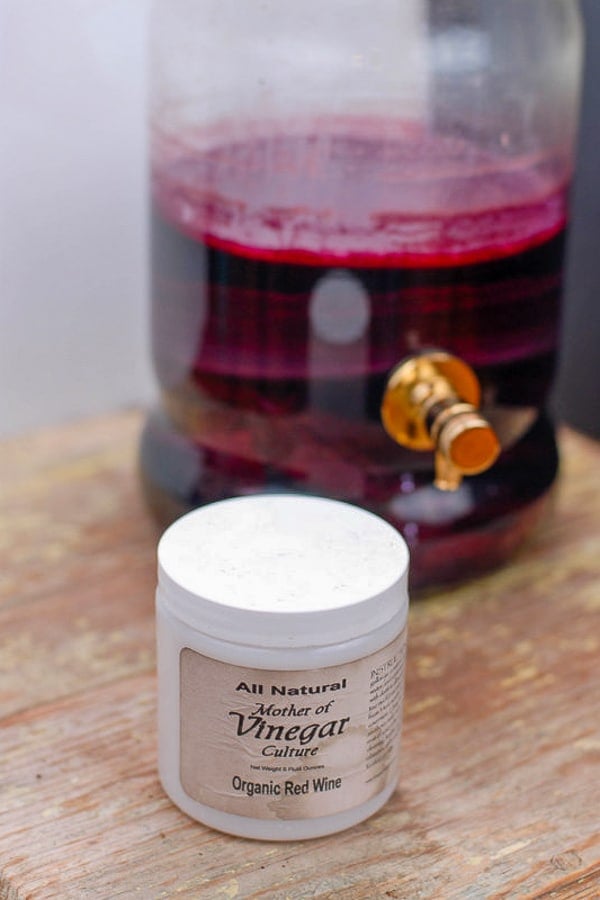
Over time the mother grows to make an opaque thin layer on the top of the liquid. Each time you add more liquid (referred to as ‘feeding the mother’) it usually dislodges the vinegar mother and a new one will grow (see photo below).
When your vinegar batch is mature, you can even give part of your vinegar mother to a friend with some of the vinegar and they can start a batch of their own. I've heard tell of people (all of them in France) who have been working with the same vinegar mother for 20 years.
How to Make Vinegar at Home – Step-by-Step
Making vinegar at home is basically the same whether you want to know how to make apple cider vinegar or how to make red wine vinegar. They share similar steps using different liquids.
Step 1: Preparation Before Starting
- Decide where you'll keep your vinegar. It should be a place where it can stay (the vinegar mother doesn't respond well to being moved; it can become dislodged and discontinue making vinegar).
- It will need warmth (70-80 degrees is ideal), darkness and good air circulation.
A personal lesson about the container placement:
I started mine in December when it's cold in Colorado. I put it up on the highest shelf in my laundry room which was good for warmth.
I wrapped a hand towel around the jar and fastened it with clips to keep it dark (a great TRICK when not having a dark area for the vinegar making).
It was too close to the ceiling however and was not getting enough air circulation.
It began to smell like acetone (which I've also read is part of the process but not having had that happen since I'd say it's not good). I brought the jars down lower and they recovered fine. The cheesecloth, which you'll put on the top of the jar opening, allows circulation and keeps things (fruit flies) out.
Step 2: Sterilize your jar with hot water (not boiling) and drain
Check that the spigot is functioning properly before beginning. Because the conversion process is ongoing, you'll be 'feeding the mother' (adding additional liquid to convert to vinegar) regularly.
The converted vinegar will be at the bottom of the jar and the liquid in process of converting on the top. The spigot allows you to drain completed vinegar out the bottom for use and not disrupt the vinegar mother(s) by pouring out the top of the jar.
Step 3: Adding liquid
The vinegar mother container will have instructions about the initial liquid to add.
For the red wine vinegar, I added 16 ounces of organic sulfite free (that's the hook; you want to use low or no sulfite wine as sulfites can impede the conversion process) red wine combined with 8 ounces of water and pour it into the jar (too high an alcohol content can also impede the process so it needs to be diluted). Then add the red wine vinegar mother.
For apple cider vinegar add a bottle (22 ounces) of organic hard cider and the apple cider vinegar mother.
Step 4: Covering the Vinegar Jar with Cheesecloth
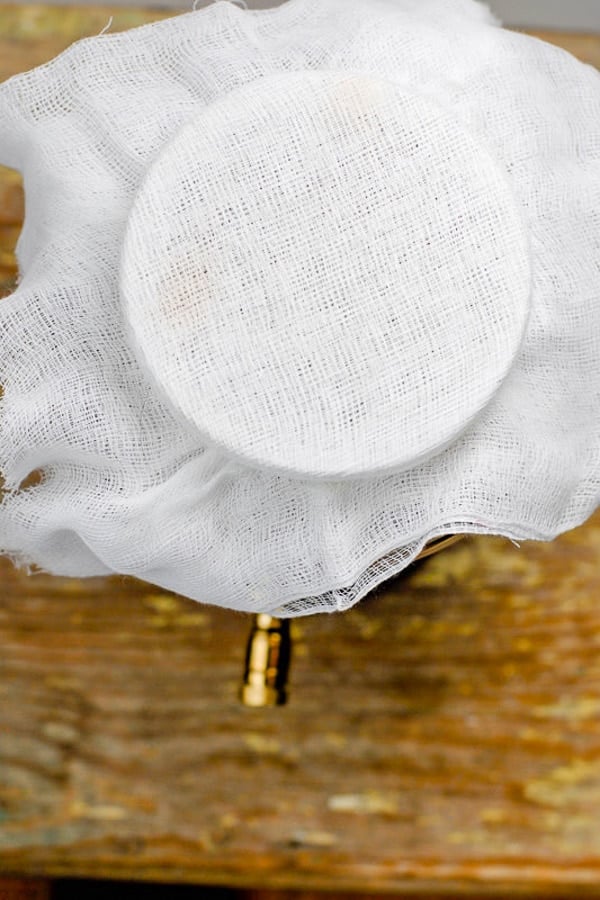
The final step, for either vinegar type, put the cheesecloth (I recommend 2-3 layers) securing it with rubber bands.
It needs to be enough to disallow fruit flies from entering the vinegar container but not so much it blocks air circulation (see more below in Troubleshooting).
Step 5: Feeding the Vinegar Mother
Until the vinegar begins to convert you want to hold off on regular feedings so as to not overwhelm the mother; which can cause the vinegar production to slow down.
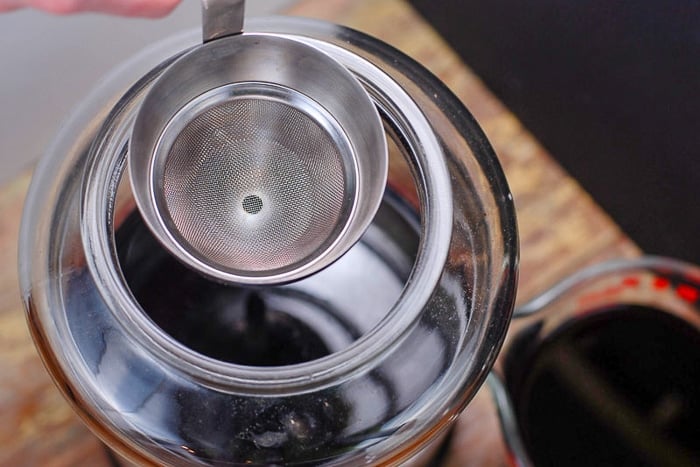
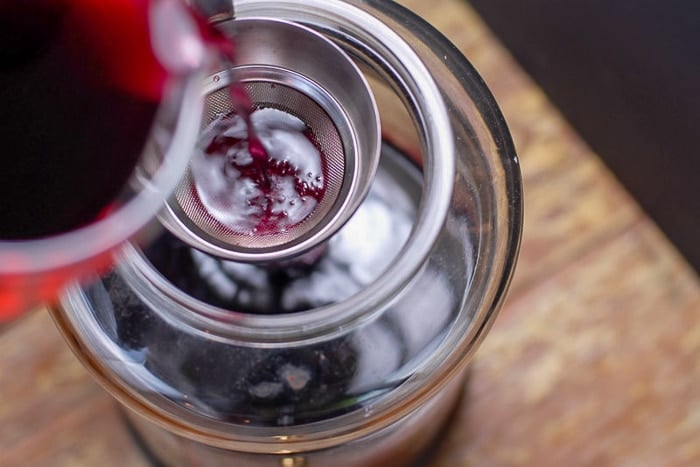
Also, I added my liquid with a funnel with a bend in the lower tube trying to direct the liquid to run down the side of the jar so as to not disrupt the mother.
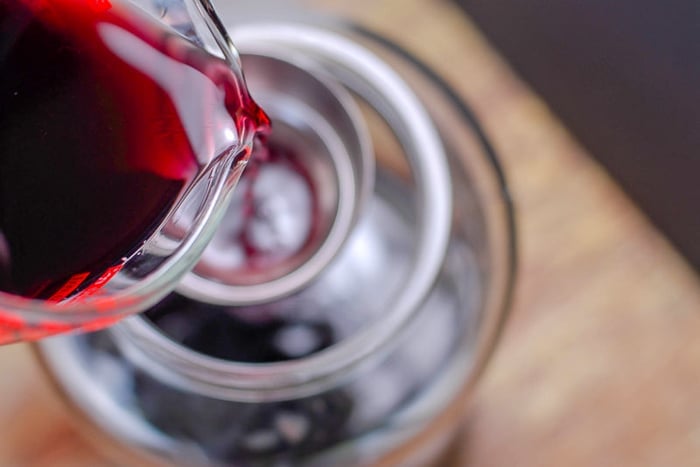
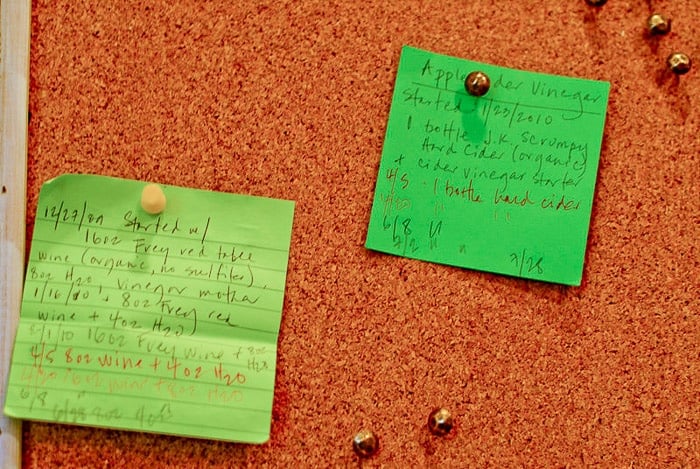
I'll include my notes that show my intervals of adding liquid, though I added more liquid to mine about once a month.
Continue to feed it the same amount you started with each time until you are getting vinegar (or at a minimum ensure the wine is always diluted with half the amount of water).
I was very regimented at first but do it when I think of it now that I have a good size batch to draw from.
Recipe FAQs + Pro Tips
When Will It be Vinegar?
The full conversion process takes about 3 months depending on the conditions where you keep your vinegar.
The warmer it is the faster it converts. You don't want it overly hot (like in a boiling garage in the middle of the summer) for you can kill the mother.
How Do You Know the Vinegar is Done?
By tasting it. You will also smell the vinegar. It's not very strong but notable.
The vinegar may be left in the container and the amount needed drawn via the spigot per use. Some people prefer to drain a full batch, pasteurize it by heating it and bottling it.
You can infuse it with herbs as well (in a container separate from the main batch).
Recipes like Homemade Cranberry Vinegar which uses apple cider vinegar (this recipe also comes with free printable gift tags when giving it as gifts) are another fun way to use your homemade vinegar.
Vinegar Making: Troubleshooting Potential Issues and Solutions
Fruit Flies
Depending on time of year and where you live, fruit flies may come to visit. They love vinegar.
SOLUTION: Three layers of cheesecloth, tightly secured to the jar opening will keep them out. I had a mass visitation this past fall and resorted to putting out small bowls with a bit of vinegar and a drop of dish soap in them which did the trick.
Proper Air Circulation
While the process is beginning really pay attention to the conditions where you are keeping the vinegar and the smell. If you get an acetone smell, check to ensure you are getting enough air circulation.
SOLUTION: Gently move the vinegar container to an area with better air circulation. Moving may dislodge the vinegar mother but another one will grow.
Evaporation
I'm not sure this is really an issue but something to watch and prompt feeding the vinegar mother. I noted when decloaking my red wine vinegar for photos a 'recession line' where I noted evaporation.
I had not added liquid for awhile as it was winter though it was dry and the heat had been running raising the room temperature.
SOLUTION: Keep a watch on the liquid line and add more liquid if needed.
Vinegar Making Supplies: WHERE TO BUY
The Vinegar Mother (or 'starter')
On Amazon.com you can find both red wine vinegar mothers and apple cider vinegar mothers as well as others I have not made yet myself; malt vinegar mother, white wine vinegar mother and rice wine vinegar mother.
Beer brewing and wine making shops usually sell them too. Since originally writing this post I’ve seen them in natural food stores too.
Glass Jars
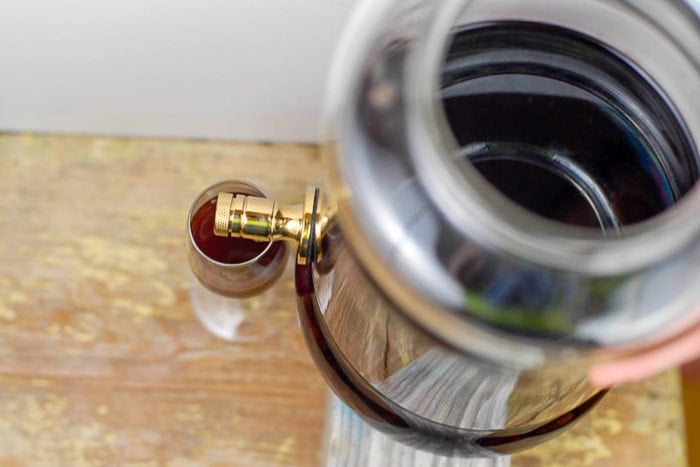
My first vinegar making jar was a gift stemming from reading an article in Savuer. It is from an infusion jar maker and was about $50.
There are many glass jars that work well for this purpose online too. I like this 1-gallon glass jar from Amazon.com because it is smaller yet still has plenty of room for making vinegar batches (often the jars are multiple gallon sizes which is far more volume than is needed).
Metal Spigots
I prefer metal spigots such as this metal spigot , which can be retrofitted onto a glass jar that might be originally fitted with a plastic spigot.
Brick and mortar shopping: I purchased a jar at World Market for $19 (Pier 1 usually has them too) and it has served me well (note: this is the same jar now available via the link to Amazon.com which ships free via Amazon Prime; often these jars are considered ‘seasonal’ in physical stores and might not be available all year round).
To check them in my photos the more expensive jar has the red wine vinegar in it and the World Market jar has the apple cider vinegar. Both come with glass lids which I don't use for vinegar making.
Starting Additional Vinegar Batches from your Vinegar Mother
The guys at Northampton Beer and Wine told me that once the vinegar mother has dropped from the top of the batch they are not as potent but also do no harm (if they get in the way of your spigot draining vinegar just take them out but leave the top active mother).
If you were to want to start another batch you can cut part of your active vinegar mother (the uppermost one in the jar) along with some of the vinegar liquid and start it in another jar or give it to a friend.
The vinegar mother you use part of will regenerate or another will form in your batch. They also shared in many cultures the inactive mothers are cut up in salads or other dishes for their believed medicinal properties.
Recipes Ideas for Homemade Vinegar
15 Salad Dressing Recipes to Get You Excited About Salad Again
Recipe
How to Make Vinegar: Red Wine Vinegar & Apple Cider Vinegar
Equipment
Ingredients
- 1 Vinegar Mother for the type of vinegar being made (e.g. apple cider vinegar mother, red wine vinegar mother, etc)
For Apple Cider Vinegar
- 22 ounces Organic Hard Cider
For Red Wine Vinegar
- 16 ounces SULFITE-FREE Red Wine
- 8 ounces Water
- Cheesecloth
- Rubber Bands
Instructions
Before Beginning
- Determine where the vinegar will be made. It should be a place where it can stay (the vinegar mother does not love moving). It will need warmth (70-80 degrees is ideal), darkness and good air circulation.
- Sterilize your jar with hot water (not boiling) and drain. Check that the spigot is functioning properly before beginning.
Making the Vinegar
- Adding liquid. The vinegar mother container will have instructions about the initial liquid to add.
- For the red wine vinegar Combine 16 ounces of organic sulfite free (required) red winewith 8 ounces of water in the jar. Then add the red wine vinegar mother.
- For apple cider vinegar Add a bottle of organic hard cider and the apple cider vinegar mother.
- The final step (for either vinegar type): Put 2-3 layers cheesecloth over the opening of the vinegar container securing it with rubber bands.
Feeding the Vinegar Mother
- Until the vinegar begins to convert hold off on regular ‘feedings’ (addition of more liquids) so as to not overwhelm the vinegar mother. Under normal temperature conditions adding the same amount of liquid as the initial ingredients monthly is about the right interval.
- NOTE: adding additional liquid once the vinegar mother has formed with a long neck funnel to allow the liquid to drain into the jar along the glass (vs pouring it onto the vinegar mother) helps not disrupt the mother.
- The full vinegar conversion tastes approximately 3 months and can be affected by temperature. Tasting the vinegar will confirm when it’s finished.
- Liquids can continue to be poured into the vinegar container to continue vinegar making or the completed vinegar may be drained from the container and stored.
Nutrition
Published originally February 11, 2011.

Mary Rizzo says
i’m a newbie vinegar maker & your instructions are so much clearer than most! my vinegar process started just a couple weeks ago, but i noticed the dreaded acetone smell last night. i moved the crock where it would get more air circulation, but do i need to throw the batch away? seems like opinion is divided on that.
Toni Dash says
Hi Mary! Congrats on making your own vinegar! As you read in this blog post I encountered this as well when placing a batch very high in my laundry room which disallowed my air movement around the top. Once I moved it to a location lower with plenty of air space above it, it was fine. I don’t think you need to throw it away but see if the smell doesn’t clear out now that you’ve selected a better location. If the smell persists I might give a call to the Northampton Beer and Wine guys (link to their website in the post) for consultation.
John George says
We own a farm in New Jersey and are growing Aronia. To make a very long story short, I have acquired approx. 300 gal of Aronia wine that has starting to turn. How can I handle not wasting the opportunity to start a product line selling vinegar? Is it possible to make vinegar in say 5 gal batches? It would take years to cultivate enough Mother to satisfy all that wine. Help! John George
Toni Dash says
Hi John George. I would suggest you contact Northampton Beer and Wine who are listed in the ‘Where to Buy’ section of this post for your question. They would have experience making vinegar on a larger scale and with the type of wine you are making hopefully. Good luck!
Aldo Emer says
Dear sir I am wanting to by MOTHER OF VINEGAR
Toni Dash says
Hi Aldo. I do not sell vinegar mothers however you can find some links in the blog post where you can buy online or ideas of where to look locally to you.
MamaToMany says
Wooowwww. My interest has been piqued, that is for certain. I have long ached over the cost of the little Bragg’s bottles and wondered if “the mother” they provide is really some sort of magic that only *they* can provide. Sooooo, aha! I found your site and now my brain is wrapping around this new-to-me concept. I have 7 kids (4yrs – 12yrs) & look for ANY ways to A) save $, and B) keep the fam healthy via natural products.
Thank you for explanation- I look forward to trying this out!
Sherry says
I am confused about the wine. It is not clear if I can add wine(+water) as it goes along. Does all the wine need to be the same, i.e. all pinot or all zinfandel, etc. or can I use the left-over wine from various bottles. (As if there is ever any left-over wine!!)
Toni Dash says
Hi Sherry. As noted in Step 3 and the ‘Feeding the Mother’ section the original combination of low or no sulfite red wine and water should be left until the batch fully converts to vinegar (the length of time depends on your environmental conditions but on average takes 3 months; longer in colder winter months). After that point you can follow instructions for feeding the mother, using the same ratio and amount to allow the mother to properly convert to vinegar. My notes of frequency are included in the photo.
I have only made vinegar this way using the same organic sulfite-free wine (for the reasons shared in the tutorial) and have not mixed random wines. I think you could try it being mindful of the sulfite levels which can impede the Mother’s ability to convert to vinegar. I do not know how mixing of wine types would affect the end flavor of the vinegar but it might be fun to experiment! Good luck and hope that helps.
Nick says
Hello, I have some questions.
I have made my own apple cider vinegar from the cores and peels, the problem is the cores keep floating over the water, is that a problem? the part that floats over the water has developed something which I am not sure if it’s the mother or the mold.
Nice blog!!
Thanks a lot.
Toni Dash says
I’m sorry Nick I’ve only made Apple Cider Vinegar in the method described with hard cider. You might contact a distilling supply store that carries vinegar mothers to ask about your method and issues. Good luck!
The Crunchy Urbanite says
Fantastic post. I’ve just started making vinegar (acv) but was having a hard time finding any helpful info on how to feed it. Very thorough. Thank you.
Susan in Alabama says
Thanks so much for the awesome pictures. I am about to get started making vinegar and to have your pictures of a container with the “layers” of mothers that have dislodged probably saved me a lot of grief when that happens to me. Your info is spectacular also, I believe anybody could do this from your instructions. (I will let you know if I am an “anybody”) This adventure is a continuance of my hubby and I starting out making wine, which lead to growing our own grapes to make our wine. Next came honey, and yes we now have honey bees. The vinegar has come about because I am now drinking a glass of water with a spoon of honey and a spoon of vinegar every morning and it has made great differences in my arthritis and my blood sugar is going down. So we are now ready to make our own vinegar and plan on making it from some of our wine in the near future. Thanks again for your info.
Toni Dash says
Susan with your history you will have absolutely no trouble with making vinegar (and will be so glad you did). The Apple Cider vinegar develops such a wonderful sweetness almost like a balsamic vinegar. Nothing like what you buy in the store.
I appreciate your generous feedback on my post. I did at the end run it by my expert friends at the store I cited in Boston who are professionals in making wine, beer and vinegar and got thumbs up and gold star so it’s accurate. I tend to have a billion questions when I endeavor something like this so tried to concisely cover anything that might come up!
Good luck (though I’m sure you don’t need it) and looks forward to some fantastic vinegar in a few months!
Wendy says
Thanks for the info! I had this page saved and wish I had reread it before I placed my order with Amazon. Would have been able to run by the local shop in Denver and save time and money on shipping. Maybe I’ll go there anyway and get a mother for red wine and start that first while I’m waiting for the white wine mother.
We’ve got a couple of bottles of decent and cheap pinot grigio that I’ve been dying to convert to vinegar. I’ve been buying bottles of pinot grigio vinegar for salad dressing and a girl could go broke doing that.
Toni Dash says
Be sure you use the correct Mother for the wine type you are using. I believe there are white wine mothers though I’ve only made red wine vinegar and apple cider vinegar. Have fun!
Charisa says
Dear Toni,
We are obviously soul sisters. I love that you have a worm farm. Thank you for this great article. I’m attempting to stop repinning the awesome stuff you pin, but it’s just too good! Have a beautiful day!
Toni Dash says
Awwww…..thank you Charisa! So glad you found
me! Glad you enjoy the Pinterest pins. Never stop repinning! Have a great week.